

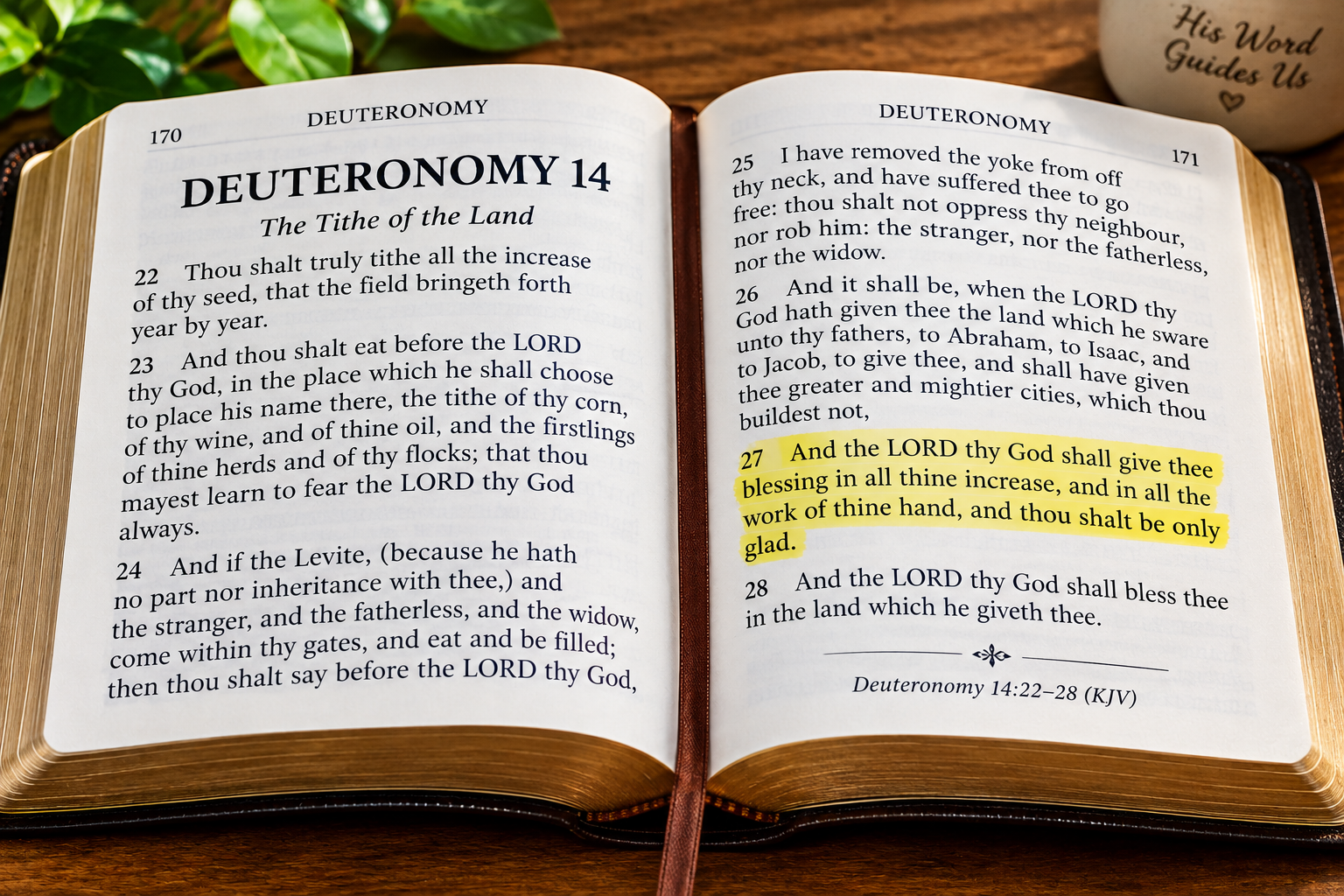
Understanding the Ten Biblical Principles of Tithing
Tithing is an important subject in biblical teaching because it concerns how people honor God, manage their resources, support ministry, and care for others. The word tithe means a tenth, or 10 percent. In the Old Testament, tithing was part of God’s covenant instructions to Israel and involved agricultural produce and livestock.
The Bible also records examples of giving a tenth before the law of Moses. In Genesis 14:18–20, Abraham gives a tenth to Melchizedek, king of Salem and priest of God Most High. In Genesis 28:20–22, Jacob promises to give God a tenth of what he receives.
Under Israel’s covenant law, tithes supported the Levites and contributed to certain community responsibilities. In the New Testament, Jesus addressed tithing while emphasizing justice, mercy, and faithfulness. The apostles also taught believers to give willingly, generously, and according to their means.
Christians interpret the continuing obligation of the 10 percent tithe differently. Some churches teach it as a continuing requirement or minimum, while others understand the Old Testament tithe as part of Israel’s covenant law and emphasize New Testament principles of generous, proportionate giving.
Nevertheless, Scripture provides enduring principles for understanding giving and stewardship. The following ten principles explore these teachings and how Christians can apply them today.
Key Scriptures: Genesis 14:18–20; Leviticus 27:30; Matthew 23:23; 2 Corinthians 9:7.
1. Principle One: Recognize God as the Owner of Everything
Key Scripture: Psalm 24:1
Psalm 24:1 declares that the earth and everything in it belong to the Lord. This statement establishes an important foundation for biblical stewardship.
The Bible teaches that people are responsible for managing the resources entrusted to them. Income, possessions, abilities, opportunities, and material resources can all be understood within this broader responsibility.
In the Old Testament, the Israelites were instructed to set aside tithes from their agricultural produce and livestock. These instructions reminded them that their livelihood was connected to the land and God’s provision.
Recognizing God’s ownership does not mean that people have no responsibility for their possessions. Rather, it encourages them to use their resources wisely, honestly, and generously.
How to Apply This Principle
- Manage your income and possessions responsibly.
- Consider how your financial decisions reflect your faith and values.
- Avoid making wealth or material possessions the center of your life.
- Use your resources to support meaningful work and help people in need.
Biblical lesson: Giving begins with recognizing that our resources carry responsibilities beyond personal consumption.
2. Principle Two: Give in Response to God’s Provision
Key Scripture: Deuteronomy 8:17–18
Deuteronomy 8:17–18 warns Israel against believing that personal strength alone produces wealth. The people were instructed to remember the Lord, who gave them the ability to produce wealth.
This passage emphasizes gratitude and humility. People work, plan, and make decisions, but they also depend on opportunities, abilities, health, relationships, and circumstances beyond their complete control.
Abraham’s encounter with Melchizedek in Genesis 14:18–20 provides an early biblical example of giving a tenth. After Abraham’s victory, Melchizedek blessed him, and Abraham gave him a tenth of everything.
Although Genesis does not explicitly explain every motive behind Abraham’s gift, the event is frequently discussed in connection with honoring God and responding to His provision.
For many Christians, giving is a practical expression of gratitude. It can support a church, contribute to missions, or help people experiencing hardship.
How to Apply This Principle
- Reflect on the resources and opportunities you have received.
- Practice gratitude rather than taking every achievement for granted.
- Establish a giving plan that reflects your convictions and circumstances.
- Avoid treating giving as a transaction intended to guarantee wealth.
Biblical lesson: Giving can express gratitude for God’s provision without becoming a way of trying to control God’s response.
What are the Ten Biblical Principles of Tithing?
They are principles of stewardship, gratitude, biblical interpretation, ministry support, willing giving, intentional planning, generosity, justice, integrity, and worship. These principles draw from both Old Testament teachings about tithing and New Testament teachings about giving.
Why is tithing discussed in the Bible, and what is its purpose?
In the Old Testament, tithing supported the Levites and contributed to community responsibilities. More broadly, biblical teaching connects giving with honoring God, managing resources responsibly, and helping people in need.
Does the Bible require every Christian to give 10 percent today?
Christians disagree about whether the 10 percent tithe remains a binding requirement. The New Testament teaches generosity and support for ministry but does not explicitly prescribe a universal 10 percent minimum for every believer.
How should one apply Principle Five: Give Willingly and Cheerfully?
Paul teaches that each person should give what they have decided in their heart, not reluctantly or under compulsion, because God loves a cheerful giver. Giving should be thoughtful and voluntary, not forced or performed for gain.
What is the overall message about tithing and giving for believers today?
Scripture emphasizes responsible stewardship, generosity, support for ministry, and care for people in need, while Christians differ on whether a fixed percentage is required. The central lesson is that biblical giving involves how resources are used to honor God, serve others, and live faithfully.
3. Principle Three: Understand Tithing Within Its Biblical Context
Key Scriptures: Leviticus 27:30; 2 Corinthians 9:7
One of the most important principles of biblical interpretation is to read each passage in its historical and literary context.
Leviticus 27:30 describes a tenth of the land’s produce as holy to the Lord. This instruction belongs to the covenant law given to Israel.
Second Corinthians 9:7, by contrast, addresses Christian giving and teaches that each person should give according to what they have decided in their heart, not reluctantly or under compulsion.
Both passages concern giving, but they address different historical and covenant settings.
Christians differ on whether the Old Testament tithe establishes a continuing requirement to give 10 percent of modern income. Some consider the tenth a continuing obligation, while others understand it as part of Israel’s covenant law and emphasize New Testament principles of generous, willing, and proportionate giving.
Understanding these differences helps readers distinguish explicit biblical statements from conclusions drawn by particular Christian traditions.
How to Apply This Principle
- Read biblical passages in their surrounding context.
- Consider who received the original instruction and why.
- Distinguish an explicit command from a modern application.
- Study different Christian interpretations fairly.
Biblical lesson: Faithful application begins with understanding what Scripture says in context.
4. Principle Four: Support Ministry and Those Who Serve
Key Scriptures: Numbers 18:21–24; 1 Corinthians 9:13–14
In the Old Testament, tithes helped support the Levites, who had responsibilities associated with Israel’s worship and religious life.
Numbers 18:21–24 explains that the Israelites’ tithes were assigned to the Levites in return for their service. This provision helped sustain those responsible for particular religious duties.
The New Testament also recognizes the practical needs of ministry. In 1 Corinthians 9:13–14, Paul teaches that those who proclaim the gospel may receive their living from the gospel.
These passages describe different systems, but both recognize that religious ministry may require material support.
Today, financial contributions can help churches maintain facilities, provide pastoral care, support teaching and outreach, fund missions, and assist people in need.
However, support for ministry should be accompanied by integrity and accountability. Churches and ministries have a responsibility to handle donations carefully and use them for appropriate purposes.
How to Apply This Principle
- Consider supporting a church or ministry whose work aligns with your convictions.
- Learn how contributions are used.
- Encourage transparency and responsible financial management.
- Remember that ministry support should serve meaningful work rather than personal enrichment.
Biblical lesson: Giving can help sustain religious service and the practical work of ministry.
5. Principle Five: Give Willingly and Cheerfully
Key Scripture: 2 Corinthians 9:7
Second Corinthians 9:7 provides one of the clearest New Testament teachings about the attitude of the giver.
Paul teaches that each person should give what they have decided in their heart, not reluctantly or under compulsion, because God loves a cheerful giver.
The verse emphasizes willingness and sincerity. Giving should not be forced through shame, manipulation, or threats of financial punishment.
Cheerful giving does not mean that every financial decision must produce an intense feeling of happiness. Rather, it means that giving should be a thoughtful and willing response instead of an act imposed through coercion.
This principle also challenges people to examine their motives. Giving should not be used simply to gain recognition, control others, or purchase a promised financial blessing.
How to Apply This Principle
- Decide on a giving plan through prayer, reflection, and responsible budgeting.
- Give sincerely rather than out of fear.
- Avoid judging another person’s faith by the amount they contribute.
- Encourage churches to teach generosity without financial manipulation.
Biblical lesson: The attitude and willingness of the giver matter, not merely the amount contributed.
6. Principle Six: Give Regularly and Intentionally
Key Scripture: 1 Corinthians 16:1–2
Biblical giving can be approached with planning rather than left entirely to spontaneous decisions.
In 1 Corinthians 16:1–2, Paul gives instructions concerning a collection for believers in need. He tells the Corinthians to set something aside on the first day of each week in keeping with their prosperity.
The passage demonstrates the value of preparing for generosity and making contributions consistently.
It does not establish a universal percentage for every Christian. Instead, it illustrates an organized approach to collecting resources for a specific purpose.
Many Christians use tithing as a framework for regular giving. Others establish a different giving plan based on their interpretation of Scripture and their circumstances.
In either case, planning can help people support their church or charitable causes while remaining attentive to essential household expenses.
How to Apply This Principle
- Review your income and essential expenses.
- Decide how much you can responsibly give.
- Choose a regular schedule, such as weekly or monthly.
- Set aside the contribution according to your plan.
- Review the plan when your circumstances change.
Biblical lesson: Intentional giving helps translate generosity into a consistent practice.
7. Principle Seven: Practice Generosity Beyond a Percentage
Key Scriptures: Acts 2:44–45; 2 Corinthians 8:12–14
A percentage can help organize financial giving, but biblical generosity extends beyond a calculation.
Acts 2:44–45 describes early believers sharing possessions and resources to meet one another’s needs. Second Corinthians 8:12–14 emphasizes willingness and giving according to what a person has.
These passages show that Christian generosity includes responding to real needs. It may involve financial contributions, sharing food, providing practical assistance, or helping someone through a difficult period.
Generosity should not be measured solely by the size of a donation. A person’s financial circumstances and ability to give also matter.
Second Corinthians 8:12 emphasizes that a gift is acceptable according to what a person has, rather than what the person does not have.
How to Apply This Principle
- Support people experiencing hardship when you are able.
- Consider giving to charitable causes in addition to supporting church ministry.
- Share your time, skills, and practical resources.
- Avoid measuring another person’s generosity solely by money.
Biblical lesson: Generosity is a way of responding to the needs of others, not merely meeting a financial target.
8. Principle Eight: Practice Justice, Mercy, and Faithfulness
Key Scripture: Matthew 23:23
In Matthew 23:23, Jesus criticizes the scribes and Pharisees for carefully tithing mint, dill, and cumin while neglecting the weightier matters of the law: justice, mercy, and faithfulness.
These religious leaders paid close attention to detailed requirements but failed to give sufficient attention to important moral responsibilities.
Jesus said they should have practiced the weightier matters without neglecting the others.
This teaching is essential to understanding biblical giving. Financial contributions cannot replace honesty, compassion, fairness, and responsible conduct.
A person may give regularly to a church while neglecting people in need or acting unjustly toward others. Jesus’ words challenge believers to examine their entire lives rather than measuring faithfulness by religious observance alone.
The passage occurs within the setting of Jewish religious life under the law, so Christians differ on how directly it establishes a continuing tithing obligation. However, the importance of justice, mercy, and faithfulness is central to Jesus’ teaching.
How to Apply This Principle
- Treat people fairly in your personal and professional relationships.
- Show compassion toward people experiencing hardship.
- Practice honesty in financial dealings.
- Avoid using religious giving to excuse harmful behavior.
Biblical lesson: Giving should accompany a life characterized by justice, mercy, and faithfulness.
9. Principle Nine: Give With Integrity and Humility
Key Scriptures: Matthew 6:1–4; 2 Corinthians 8:20–21
Jesus warns in Matthew 6:1–4 against performing acts of righteousness merely to gain public recognition. His teaching includes giving to people in need and emphasizes sincere motives rather than public display.
Giving can become an opportunity for pride when people use their contributions to gain status, praise, or influence.
Biblical generosity points in a different direction. It encourages sincere concern for others without turning financial support into a performance.
Integrity also matters in the handling of donations. In 2 Corinthians 8:20–21, Paul describes taking care to avoid blame in administering contributions and seeking to do what is right before God and people.
This principle applies to both the giver and the recipient. Individuals should give sincerely, and organizations should manage contributions responsibly.
How to Apply This Principle
- Give without seeking public recognition.
- Avoid using donations to control church decisions or other people.
- Support organizations that demonstrate accountability.
- Encourage transparent and responsible financial practices.
Biblical lesson: Giving should reflect humility and integrity, while donated resources should be handled responsibly.
10. Principle Ten: Treat Giving as an Expression of Worship
Key Scriptures: Proverbs 3:9; Hebrews 13:15–16
Proverbs 3:9 instructs readers to honor the Lord with their wealth and the firstfruits of their produce.
Hebrews 13:15–16 connects praise with doing good and sharing with others, describing these actions as pleasing to God.
Together, these passages illustrate that worship includes more than words or attendance at religious gatherings. It can also be expressed through generosity, service, and responsible use of resources.
For many Christians, tithing is one way of expressing worship because it involves intentionally setting aside resources for God-related purposes.
However, giving is only one part of a broader life of worship. Financial contributions should accompany faithfulness, compassion, honesty, and service.
How to Apply This Principle
- Approach giving with gratitude and sincerity.
- Support work that reflects your Christian convictions.
- Combine financial generosity with practical service.
- Let your financial decisions reflect a broader commitment to faithful living.
Biblical lesson: Giving can be an expression of worship when it reflects sincere devotion and concern for others.
What Do These Ten Principles Teach Us About Tithing?
The ten principles show that biblical giving involves several connected responsibilities:
- Stewardship: Recognize that resources carry responsibilities.
- Gratitude: Acknowledge God’s provision.
- Understanding: Interpret Scripture in its historical and covenant context.
- Support: Contribute to meaningful ministry and service.
- Willingness: Give sincerely rather than under compulsion.
- Planning: Make generosity intentional and consistent.
- Generosity: Respond to the needs of others.
- Righteousness: Practice justice, mercy, and faithfulness.
- Integrity: Give humbly and support responsible financial practices.
- Worship: Treat giving as one expression of a faithful life.
These principles provide a framework for studying biblical tithing while recognizing that Christians differ on whether a specific 10 percent contribution is required today.
Is Tithing Required for Christians Today?
Christians interpret the continuing obligation of the tithe differently.
Some churches teach that the 10 percent tithe remains a continuing requirement or a minimum standard for Christian giving. They often point to Abraham’s example, Jesus’ words in Matthew 23:23, and the importance of honoring God with financial resources.
Other Christians understand the Old Testament tithe as part of Israel’s covenant law. They emphasize that the New Testament calls believers to give willingly, generously, regularly, and according to their means without explicitly prescribing a universal 10 percent minimum.
Both perspectives should be represented accurately when discussing the subject.
The Bible clearly emphasizes generosity, responsible stewardship, support for ministry, and care for people in need. However, Christians disagree about whether these teachings require every believer to give a fixed percentage.
A careful study should distinguish explicit biblical instructions from denominational interpretations and contemporary practices.
Key Scriptures: Malachi 3:8–10; Matthew 23:23; 2 Corinthians 9:7.
Key Bible Verses About Tithing and Giving
The following Scriptures provide a foundation for further study:
| Bible verse | Main teaching |
|---|---|
| Genesis 14:18–20 | Abraham gives a tenth to Melchizedek. |
| Genesis 28:20–22 | Jacob promises to give God a tenth. |
| Leviticus 27:30 | A tenth of the land’s produce is described as holy to the Lord. |
| Numbers 18:21–24 | Tithes provide for the Levites. |
| Deuteronomy 14:28–29 | Tithing is connected with community welfare. |
| Malachi 3:8–10 | Israel is challenged concerning tithes and offerings. |
| Matthew 23:23 | Jesus emphasizes justice, mercy, and faithfulness. |
| 1 Corinthians 16:1–2 | Giving can be planned and regular. |
| 2 Corinthians 8:12 | Giving should reflect what a person has. |
| 2 Corinthians 9:6–8 | Giving should be generous and willing. |
| Proverbs 3:9 | Honor the Lord with your wealth. |
| Hebrews 13:15–16 | Doing good and sharing are pleasing to God. |
Read each passage in context to understand its original audience, purpose, and application.
Frequently Asked Questions About the Ten Biblical Principles of Tithing
What Are the Ten Biblical Principles of Tithing?
They are principles of stewardship, gratitude, biblical interpretation, ministry support, willing giving, intentional planning, generosity, justice, integrity, and worship. These principles draw from both Old Testament teachings about tithing and New Testament teachings about giving.
Why Is Tithing Important in the Bible?
In the Old Testament, tithing supported the Levites and contributed to community responsibilities. More broadly, biblical teaching connects giving with honoring God, managing resources responsibly, and helping people in need.
What Is the Difference Between Tithing and Giving?
Tithing specifically means giving a tenth. Giving is broader and includes financial contributions, charitable assistance, sharing resources, and other expressions of generosity.
Does the Bible Require Every Christian to Give 10 Percent?
Christians disagree about whether the 10 percent tithe remains a binding requirement. The New Testament clearly teaches generosity and support for ministry but does not explicitly prescribe a universal 10 percent minimum for every believer.
Does Tithing Guarantee Financial Blessings?
The Bible encourages generosity and trust in God, but it does not establish a universal guarantee that giving 10 percent will make someone wealthy or produce a specific financial return.
What Is the Most Important Principle of Tithing?
An essential principle is to honor God through sincere and responsible stewardship. Giving should reflect gratitude and generosity while accompanying justice, mercy, integrity, and concern for others.
Conclusion: Applying the Ten Biblical Principles of Tithing
The ten biblical principles of tithing help explain why giving has an important place in Scripture. They connect the use of resources with stewardship, gratitude, ministry support, generosity, justice, integrity, and worship.
In the Old Testament, tithing was part of Israel’s covenant law and supported religious and community responsibilities. In the New Testament, Jesus emphasized justice, mercy, and faithfulness, while the apostles encouraged believers to give willingly and according to their means.
Christians differ on whether the 10 percent tithe remains a universal requirement today. Nevertheless, Scripture consistently encourages responsible stewardship, generosity, support for ministry, and care for people in need.
The central lesson is that biblical giving involves more than calculating a percentage. It concerns how people use their resources to honor God, serve others, and demonstrate faithfulness in everyday life.
Closing Scripture: 2 Corinthians 9:7.
Paul’s teaching reminds believers that giving should be a thoughtful and willing decision, not an act performed reluctantly or under compulsion.