

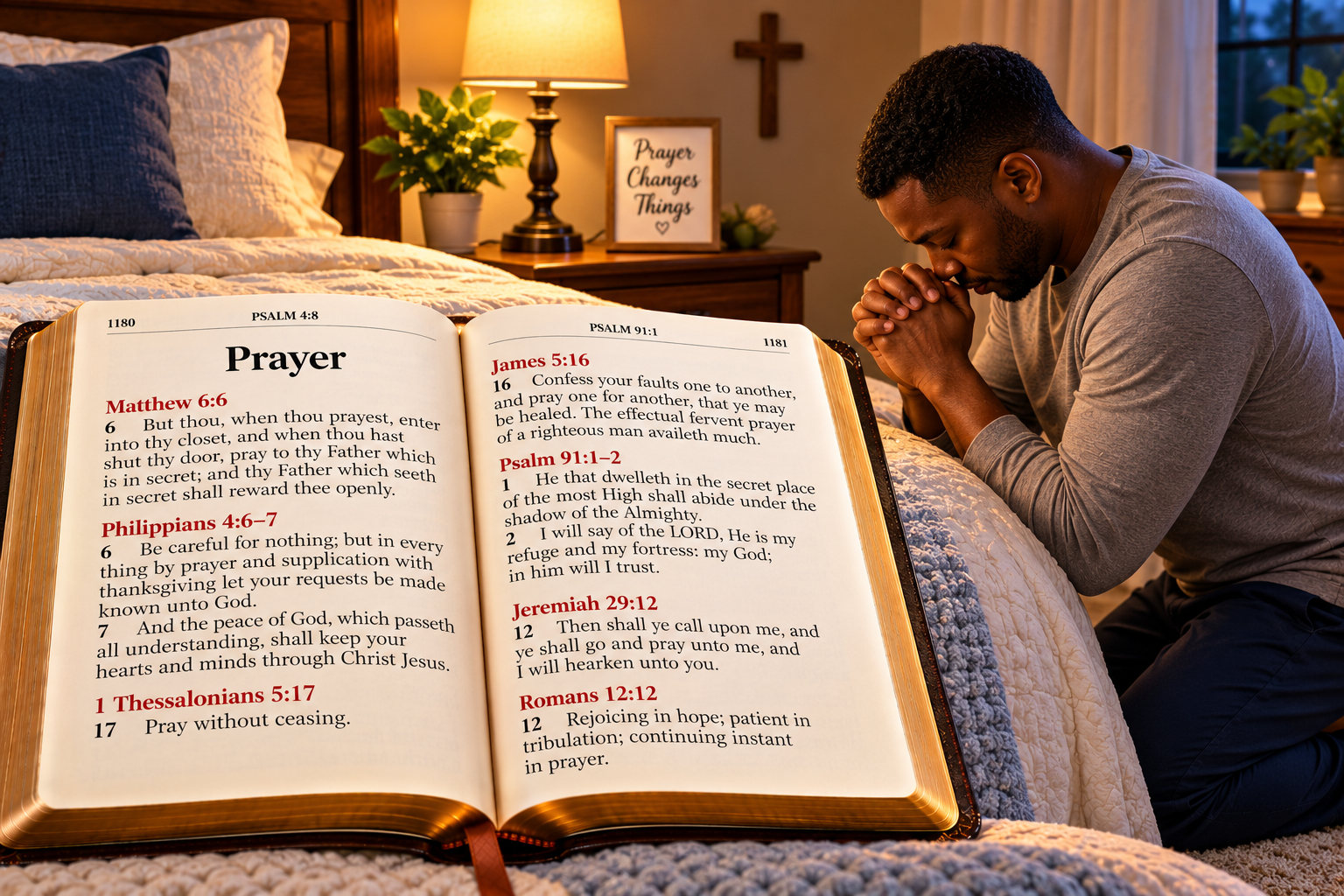
Prayer is one of the most important practices in Christian living. It is a means through which believers communicate with God, express their gratitude, confess their sins, seek wisdom, intercede for others, and find strength during difficult circumstances. Through prayer, Christians acknowledge their dependence on God and seek to align their lives with His will.
The power of prayer is a central theme throughout the Bible. From the prayers of Abraham, Moses, Hannah, David, and Daniel to the example of Jesus Christ and the teachings of the apostles, Scripture demonstrates the importance of seeking God faithfully.
James 5:16 declares that the prayer of a righteous person is powerful and effective. This verse encourages Christians to recognize the significance of prayer while remembering that prayer is not a formula for controlling God or guaranteeing a particular outcome. Rather, it is an expression of faith, dependence, obedience, and trust in God’s wisdom.
Prayer does not mean that believers will never experience suffering, disappointment, sickness, or unanswered questions. Jesus Himself prayed during His suffering, and the apostle Paul described seasons of hardship despite his faithfulness to God. Nevertheless, prayer gives Christians an opportunity to seek God’s help, receive spiritual encouragement, develop perseverance, and remain faithful through life’s challenges.
Understanding the power of prayer can transform how Christians approach their daily responsibilities, relationships, decisions, and spiritual growth.
In this article, we will explore the biblical meaning of prayer, why prayer is powerful, the benefits of prayer in Christian living, examples of prayer in the Bible, and practical steps for developing a consistent prayer life.
1. What Is Prayer in Christian Living?
Prayer is communication with God. It involves approaching Him with reverence, faith, honesty, and humility.
For Christians, prayer is an essential part of a relationship with God through Jesus Christ. It provides an opportunity to worship God, thank Him for His goodness, confess sin, ask for guidance, express personal concerns, and pray for the needs of others.
Prayer can take different forms. It may be spoken aloud, whispered, written in a journal, or offered silently in the heart. It can take place in a church, at home, outdoors, at work, or in another suitable setting.
The Bible does not restrict prayer to a particular location or time of day. Instead, it encourages believers to seek God continually and sincerely.
Different Forms of Prayer
1. Prayer of worship: Praising God for His holiness, greatness, love, and faithfulness.
2. Prayer of thanksgiving: Expressing gratitude for God’s provision, mercy, protection, and blessings.
3. Prayer of confession: Acknowledging sin and seeking God’s forgiveness.
4. Prayer of supplication: Bringing personal needs, concerns, and requests before God.
5. Intercessory prayer: Praying for other people, including family members, friends, church leaders, and those experiencing hardship.
6. Prayer of surrender: Entrusting personal desires, decisions, and circumstances to God’s will.
These forms of prayer help believers develop a balanced prayer life rather than approaching God only when they need something.
Key Bible Verse: Philippians 4:6
Paul encourages Christians to bring their requests to God through prayer and supplication with thanksgiving.
This teaching reminds believers that prayer can include both specific requests and gratitude for God’s faithfulness.
2. What Does the Bible Say About the Power of Prayer?
The Bible presents prayer as an important expression of faith and dependence on God. Throughout Scripture, believers are encouraged to pray, seek God’s wisdom, confess their sins, and remain faithful in difficult circumstances.
James 5:16 — Prayer Is Powerful and Effective
James 5:16 teaches that the prayer of a righteous person is powerful and effective.
This passage appears in a discussion about confession, healing, and prayer within the Christian community. It encourages believers to pray faithfully and support one another spiritually.
The verse does not suggest that Christians can control God’s actions through prayer. Rather, it emphasizes the importance and significance of sincere prayer offered in faith.
Jeremiah 33:3 — Call Upon God
Jeremiah 33:3 records God’s invitation to Jeremiah to call upon Him and receive an answer concerning great and hidden things.
In its original context, this promise was given to Jeremiah during a specific period in Israel’s history. It illustrates God’s willingness to reveal His purposes to His prophet and encourages readers to recognize the importance of seeking God.
Christians should interpret this verse in its historical context rather than assuming it guarantees a specific answer to every personal request.
Matthew 7:7 — Ask, Seek, and Knock
Jesus teaches His followers to ask, seek, and knock in Matthew 7:7–11.
This passage encourages persistence in approaching God and emphasizes the Father’s goodness toward His children.
Prayer is therefore not simply an emergency response. It is an ongoing practice of seeking God and depending on His wisdom and goodness.
1 Thessalonians 5:17 — Pray Without Ceasing
Paul instructs believers to pray without ceasing.
This command encourages a continuous attitude of prayer and dependence on God throughout everyday life.
It does not require Christians to remain in formal prayer every moment. Rather, believers can maintain an ongoing awareness of God’s presence while setting aside intentional times for personal prayer.
Together, these passages demonstrate that prayer is an essential spiritual discipline that helps Christians seek God, trust His character, and remain faithful to His Word.
3. Why Is Prayer Powerful in Christian Living?
The power of prayer is not found in the length of a prayer, the repetition of particular words, or the ability to demand a desired outcome from God. Its significance comes from the believer’s relationship with God and the opportunity to seek His help, wisdom, and will.
The following are important ways prayer influences Christian living.
1. Prayer Strengthens Your Relationship With God
One of the greatest purposes of prayer is to develop a closer relationship with God.
Just as communication is important in human relationships, prayer is an essential part of a believer’s personal walk with God. Through prayer, Christians express love, gratitude, dependence, and a desire to know Him more deeply.
Private prayer provides an opportunity to speak honestly with God without the pressure of impressing other people.
Believers can bring their questions, weaknesses, hopes, fears, and concerns before Him while seeking to understand His character through Scripture.
Bible Verse: James 4:8
“Draw nigh to God, and he will draw nigh to you.”
This verse encourages believers to approach God sincerely and turn away from sin.
A consistent prayer life can help Christians remain spiritually attentive and develop a deeper appreciation for God’s grace and faithfulness.
2. Prayer Strengthens Faith and Trust in God
Faith is essential to Christian living, but believers may encounter circumstances that challenge their confidence.
Financial difficulties, family problems, illness, disappointment, and uncertainty about the future can make it difficult to remain hopeful.
Prayer gives Christians an opportunity to bring these concerns before God and reflect on His promises.
Bible Verse: Mark 11:24
Jesus teaches His followers to pray with faith.
This teaching encourages trust in God, but it should not be interpreted as a guarantee that every request will be granted exactly as a person desires.
Biblical faith involves trusting God’s character and wisdom even when His answer differs from our expectations.
Through prayer, Christians can learn to depend on God rather than relying exclusively on their own understanding.
3. Prayer Brings Comfort During Difficult Times
Life includes seasons of grief, uncertainty, disappointment, and suffering.
During such times, prayer offers believers an opportunity to express their pain honestly and seek God’s comfort.
The Psalms contain many prayers of lament in which God’s people describe their distress while continuing to call upon Him.
These prayers show that faith does not require pretending that suffering does not exist.
Bible Verse: Psalm 34:17
“The righteous cry, and the LORD heareth, and delivereth them out of all their troubles.”
This verse encourages believers to call upon God during difficult circumstances.
Prayer may not immediately remove a hardship, but it can help Christians face difficulties with hope, perseverance, and a renewed awareness of their dependence on God.
Believers can also seek support from trusted friends, church leaders, healthcare professionals, and other appropriate sources of help.
4. Prayer Helps You Seek God’s Wisdom and Guidance
Christians face decisions every day. Some involve ordinary responsibilities, while others affect family, employment, relationships, finances, or ministry.
Prayer provides an opportunity to ask God for wisdom and examine decisions in light of biblical principles.
Bible Verse: James 1:5
James encourages anyone who lacks wisdom to ask God, who gives generously.
Prayer can help believers slow down, examine their motives, and consider the consequences of their choices.
It should also be accompanied by careful Bible study, sound judgment, and wise counsel.
Christians should not assume that every strong feeling or unexpected thought is a direct message from God. Decisions should be evaluated against Scripture and responsible reasoning.
5. Prayer Encourages Repentance and Spiritual Renewal
Prayer gives Christians an opportunity to examine their hearts, confess sin, and seek God’s forgiveness.
It encourages honesty about attitudes and behaviors that conflict with biblical teaching.
Confession should not be treated merely as a way to relieve guilt. It should lead to repentance, a willingness to change, and efforts to make things right where appropriate.
Bible Verse: 1 John 1:9
John teaches that God is faithful and just to forgive those who confess their sins and to cleanse them from unrighteousness.
Through confession and repentance, believers can renew their commitment to following Christ.
Prayer also helps Christians recognize the need for humility, forgiveness, and dependence on God’s grace.
6. Prayer Helps Believers Resist Temptation
Temptation can challenge Christians in many areas of life, including honesty, anger, pride, jealousy, sexual integrity, and personal discipline.
Prayer encourages believers to seek God’s strength and remain spiritually alert.
Bible Verse: Matthew 26:41
Jesus tells His disciples to watch and pray so that they do not enter into temptation.
This instruction was given in Gethsemane as Jesus prepared for His arrest.
His words remind Christians that good intentions alone may not be sufficient to resist temptation.
Prayer should be combined with practical steps, such as avoiding situations that encourage harmful behavior, seeking accountability, and following biblical principles.
7. Prayer Develops Peace and Encourages Gratitude
Worry can dominate a person’s thoughts and make everyday responsibilities more difficult.
The Bible encourages Christians to bring their concerns to God rather than allowing anxiety to control their lives.
Bible Verse: Philippians 4:6–7
Paul teaches believers to present their requests to God with thanksgiving and describes the peace of God guarding their hearts and minds through Christ Jesus.
Prayer helps Christians identify their concerns, express gratitude, and entrust their circumstances to God.
This does not mean faithful believers will never experience anxiety or emotional distress. Rather, prayer can be one important source of spiritual support while they pursue appropriate practical and professional help when needed.
8. Prayer Encourages Love and Compassion for Others
Prayer is not limited to personal needs. Christians are also called to pray for other people.
Intercessory prayer allows believers to bring the needs of family members, friends, church communities, leaders, and people experiencing suffering before God.
Praying for others can encourage a spirit of compassion and remind believers that Christian living involves serving beyond their immediate interests.
Bible Verse: 1 Timothy 2:1–2
Paul encourages prayers, intercessions, and thanksgivings to be made for all people.
Christians can use their daily prayer time to remember people who need encouragement, wisdom, healing, reconciliation, or practical assistance.
Prayer can also motivate believers to take appropriate action to help those for whom they pray.
9. Prayer Encourages Perseverance
Some situations require patience because answers do not come immediately.
Jesus used the parable of the persistent widow in Luke 18:1–8 to teach His disciples about the importance of praying and not losing heart.
The parable encourages persistence in prayer. It should not be interpreted as suggesting that God is reluctant to care for His people and must be pressured into responding.
Instead, Christians are encouraged to remain faithful, even when they must wait.
Bible Verse: Romans 12:12
Paul instructs believers to be patient in tribulation and continue steadfastly in prayer.
Persistent prayer can help Christians maintain their spiritual focus while responding faithfully to changing circumstances.
10. Prayer Encourages Obedience to God’s Will
Prayer is not simply a way to ask God to bless personal plans. It is also an opportunity to surrender those plans and seek to follow His will.
Jesus demonstrated this attitude in Gethsemane when He prayed about the suffering before Him and submitted to the Father’s will.
Bible Verse: Luke 22:42
Jesus expressed His desire for the cup of suffering to pass from Him, yet submitted to the Father’s will.
His prayer demonstrates that sincere prayer can include honest expressions of personal desire alongside faithful surrender.
Christians can follow this example by asking God for help while remaining willing to act according to biblical truth, even when obedience is difficult.
11. Prayer Strengthens Christian Fellowship
Prayer can strengthen the bonds between believers when they pray for one another, share burdens, and support those experiencing difficulty.
Although private prayer is important, Scripture also emphasizes prayer within the Christian community.
Bible Verse: Acts 2:42
The early believers devoted themselves to the apostles’ teaching, fellowship, breaking of bread, and prayers.
Prayer helps Christians recognize that faith is not intended to be lived in isolation. It encourages mutual support, humility, and shared dependence on God.
12. Prayer Helps Christians Maintain Spiritual Focus
The demands of everyday life can distract believers from their spiritual priorities.
Work, family responsibilities, technology, financial concerns, and entertainment may occupy much of a person’s attention.
Setting aside time for prayer provides an opportunity to pause, reflect on Scripture, and consider whether daily decisions align with Christian values.
Bible Verse: Psalm 46:10
“Be still, and know that I am God.”
In its original context, this verse emphasizes God’s sovereignty. It can also remind Christians to pause and reflect on His character rather than allowing daily pressures to determine their outlook.
A regular prayer routine can help believers remain attentive to their spiritual responsibilities.
4. Powerful Examples of Prayer in the Bible
The Bible contains many accounts of people who sought God through prayer. Their experiences demonstrate that prayer can be an expression of worship, dependence, repentance, courage, and surrender.
1. Hannah’s Prayer for a Child
Scripture: 1 Samuel 1:9–20
Hannah experienced deep sorrow because she had no children. She prayed earnestly before the Lord and expressed her distress.
Her story illustrates the importance of bringing deeply personal concerns to God rather than hiding emotional pain.
Hannah’s experience also reminds readers that the Bible records particular answers to prayer without promising that every believer will receive the same outcome.
Lesson: Bring your burdens to God honestly and continue trusting Him through difficult seasons.
2. Elijah’s Prayer on Mount Carmel
Scripture: 1 Kings 18:30–39
Elijah prayed during his confrontation with the prophets of Baal on Mount Carmel. He asked God to answer so that the people would recognize the Lord as the true God.
The account emphasizes God’s power and Elijah’s desire for God’s name to be honored.
It is a specific event in Israel’s history, not a formula that guarantees dramatic signs whenever a Christian prays.
Lesson: Prayer should direct attention toward God’s character and purposes rather than personal recognition.
3. Daniel’s Consistent Prayer Life
Scripture: Daniel 6:10–23
Daniel continued his regular practice of prayer despite a royal decree prohibiting prayer to anyone other than the king.
His faithfulness led to persecution, yet he continued to seek God.
Daniel’s example demonstrates that prayer can be an established spiritual discipline rather than merely a response to emergencies.
Lesson: Remain faithful in prayer even when circumstances make it difficult.
4. Jesus’ Prayer in Gethsemane
Scripture: Matthew 26:36–46
Before His arrest and crucifixion, Jesus prayed in Gethsemane. He expressed the anguish of the suffering ahead while submitting Himself to the Father’s will.
His prayer reveals the seriousness of His coming sacrifice and the importance of obedience.
Lesson: Prayer includes both honest expression of personal feelings and surrender to God’s purposes.
5. The Early Church Prayed for Peter
Scripture: Acts 12:1–17
When Peter was imprisoned, the church prayed earnestly for him. The biblical account describes Peter’s miraculous release.
This story illustrates the importance of communal intercession and the early Christians’ dependence on God during persecution.
Lesson: Pray for believers who face danger, hardship, and opposition.
6. Paul and Silas Prayed in Prison
Scripture: Acts 16:22–34
Paul and Silas prayed and sang hymns while imprisoned in Philippi. An earthquake followed, and the events eventually led to the jailer’s household hearing the message of salvation.
Their example demonstrates that worship and prayer can remain meaningful even in painful circumstances.
Lesson: Continue seeking God and maintaining faith during adversity.
5. How to Pray Effectively According to the Bible
Effective prayer is not about finding secret words that force God to grant a request. Biblical prayer involves sincerity, faith, humility, perseverance, and a desire to live according to God’s will.
The following practices can help Christians develop a meaningful prayer life.
Step 1: Approach God With Faith
Hebrews 11:6 emphasizes the importance of faith in approaching God.
Believers should pray with confidence in God’s character while recognizing that they do not control His decisions.
Faith means trusting God rather than demanding a particular result.
Step 2: Pray With a Sincere Heart
Jesus warned against using prayer primarily to impress other people (Matthew 6:5–6).
Christians should approach prayer honestly, without trying to appear more spiritual than they are.
Simple and sincere words are appropriate.
Step 3: Pray According to God’s Will
First John 5:14–15 teaches that believers can have confidence when they ask according to God’s will.
This means Christians should allow Scripture to shape their requests and remain open to God’s wisdom rather than treating personal preferences as unquestionable demands.
Step 4: Include Thanksgiving
Gratitude is an important part of biblical prayer.
Even when facing difficulties, believers can thank God for His character, the gift of salvation, the support of others, and the ways He has sustained them.
Thanksgiving does not deny pain. It helps Christians remember that hardship is not the only reality in their lives.
Step 5: Confess Sin and Seek Change
First John 1:9 encourages believers to confess their sins.
Prayer should include a willingness to acknowledge wrongdoing and pursue repentance.
Christians should also seek reconciliation or make amends where appropriate.
Step 6: Remain Persistent
Luke 18:1–8 teaches the importance of persistent prayer.
When answers are delayed, believers can continue seeking God while exercising patience and taking responsible steps to address their circumstances.
Step 7: Combine Prayer With Obedience
Prayer should influence how Christians live.
A person who prays for peace should also seek to resolve conflicts appropriately. Someone who prays for provision may need to pursue employment, manage resources responsibly, or seek assistance.
Prayer and faithful action can work together.
Step 8: Be Patient With God’s Timing
The Bible contains examples of people who waited for God’s promises and experienced long seasons of uncertainty.
Christians should avoid assuming that a delayed answer necessarily means rejection or that every delay has an obvious explanation.
Continue praying, seeking wisdom, and remaining faithful while acknowledging that some questions may remain unresolved.
6. The Lord’s Prayer: A Biblical Model for Christian Prayer
Jesus provided a model for prayer in Matthew 6:9–13, commonly known as the Lord’s Prayer.
This prayer teaches believers to approach God with reverence, seek His kingdom, depend on Him for daily needs, ask for forgiveness, forgive others, and seek protection from temptation.
The Lord’s Prayer can guide both private and corporate prayer.
Our Father Which Art in Heaven
This opening emphasizes God’s relationship with His people and His heavenly authority.
It encourages Christians to approach God with both reverence and trust.
Hallowed Be Thy Name
This phrase expresses worship and recognition of God’s holiness.
It reminds believers that prayer begins with honoring God rather than focusing exclusively on personal desires.
Thy Kingdom Come
This request expresses a desire for God’s reign and purposes to be fulfilled.
It encourages Christians to value God’s purposes above selfish ambition.
Thy Will Be Done
This phrase emphasizes surrender and obedience.
It reminds believers that prayer includes seeking God’s will, not simply asking Him to fulfill personal plans.
Give Us This Day Our Daily Bread
This request acknowledges dependence on God for daily provision.
It can include prayer for food, work, shelter, health, wisdom, and the resources needed for everyday responsibilities.
Forgive Us Our Debts, as We Forgive Our Debtors
This part emphasizes the need for forgiveness and the responsibility to forgive others.
It encourages humility before God and a willingness to pursue reconciliation where possible.
Lead Us Not Into Temptation, but Deliver Us From Evil
This request acknowledges the reality of temptation and the need for God’s help in resisting sin and remaining faithful.
The Lord’s Prayer provides a balanced framework for worship, dependence, confession, forgiveness, and spiritual protection.
7. Bible Verses About the Power of Prayer
The following Scriptures can support personal devotion, Bible study, and prayer meetings.
- James 5:16 — The prayer of a righteous person is powerful and effective.
- Matthew 7:7–8 — Jesus teaches His followers to ask, seek, and knock.
- Matthew 21:22 — Jesus teaches about faith in prayer.
- Mark 11:24 — Jesus encourages faith when praying.
- Luke 18:1 — Jesus teaches that people should pray and not lose heart.
- John 14:13–14 — Jesus speaks about asking in His name.
- John 15:7 — Jesus connects abiding in Him and His words with prayer.
- Romans 12:12 — Believers are encouraged to remain steadfast in prayer.
- Ephesians 6:18 — Paul encourages prayer in the Spirit at all times.
- Philippians 4:6–7 — Christians are encouraged to bring their requests to God with thanksgiving.
- Colossians 4:2 — Believers are instructed to continue in prayer with watchfulness and thanksgiving.
- 1 Thessalonians 5:17 — Christians are told to pray without ceasing.
- 1 Timothy 2:1–2 — Paul encourages prayer and intercession for all people.
- Hebrews 4:16 — Believers are encouraged to approach the throne of grace with confidence.
- Hebrews 11:6 — Faith is important in approaching God.
- James 1:5 — Those who lack wisdom are encouraged to ask God.
- 1 John 5:14–15 — Confidence in prayer is connected with asking according to God’s will.
- Psalm 34:17 — The psalmist describes the Lord hearing the cries of the righteous.
- Psalm 145:18 — The Lord is described as near to those who call upon Him sincerely.
- Jeremiah 29:12–13 — God speaks of His people calling upon Him and seeking Him wholeheartedly in the context of His promise to the exiles.
These passages should be read within their biblical contexts. They encourage faith and persistence while teaching believers to seek God sincerely rather than treating prayer as a guarantee of specific earthly outcomes.
8. Common Obstacles to Prayer and How to Overcome Them
Even committed Christians may experience difficulties maintaining a regular prayer life.
Lack of Time
Work, family responsibilities, and other commitments can make it difficult to set aside time for prayer.
How to overcome it: Begin with five or ten minutes a day. Choose a realistic time, such as early morning or before bed, and gradually develop the habit.
Distractions
Thoughts about unfinished tasks, messages, and daily responsibilities can interrupt concentration.
How to overcome it: Find a quiet location, put your phone aside, and keep a notebook nearby to record tasks that come to mind.
Not Knowing What to Say
Some Christians struggle to find words when they pray.
How to overcome it: Use the Lord’s Prayer as a model, read a psalm, or follow a simple pattern of worship, thanksgiving, confession, requests, and intercession.
Discouragement Over Unanswered Prayer
Waiting for an answer can lead to disappointment.
How to overcome it: Continue seeking God while examining your requests in light of Scripture. Seek wise counsel, take responsible action, and remember that God’s wisdom may differ from your expectations.
Feeling Spiritually Dry
Prayer may sometimes feel routine or emotionally unrewarding.
How to overcome it: Pray honestly, read Scripture, and focus on faithful communion with God rather than expecting a particular emotional experience.
Inconsistency
Missing prayer sessions may make it difficult to resume the habit.
How to overcome it: Start again without treating a missed day as failure. Focus on developing a sustainable practice.
9. How to Make Prayer a Daily Habit
A consistent prayer life can be developed through small, practical steps.
1. Establish a regular time. Choose a period that fits your daily routine.
2. Create a suitable environment. Find a quiet space where you can concentrate.
3. Keep a prayer journal. Record prayer requests, relevant Bible verses, and reflections on your spiritual growth.
4. Read Scripture daily. Use biblical passages to guide your prayers and shape your understanding of God’s will.
5. Pray for others. Maintain a list of people and situations that need prayer.
6. Practice gratitude. Include thanksgiving in your prayers, even during challenging seasons.
7. Review your prayer life periodically. Consider whether prayer is helping you grow in humility, faith, patience, forgiveness, and obedience.
8. Participate in Christian fellowship. Personal prayer and corporate prayer can support one another.
The purpose of these practices is not to turn prayer into a rigid performance. They are intended to make it easier to seek God consistently.
10. A Simple 15-Minute Daily Prayer Plan
The following plan can help beginners establish a regular prayer routine.
| Prayer Activity | Suggested Time |
|---|---|
| Worship and praise | 2 minutes |
| Thanksgiving | 2 minutes |
| Confession and repentance | 2 minutes |
| Bible reading and reflection | 3 minutes |
| Personal requests and guidance | 3 minutes |
| Prayer for family and others | 2 minutes |
| Surrender and closing prayer | 1 minute |
| Total | 15 minutes |
These times are suggestions rather than biblical requirements. You may spend more time on a particular area according to your needs.
The most important goal is to develop a sincere, sustainable practice of prayer that is grounded in Scripture.
11. A Powerful Daily Prayer for Christian Living
Heavenly Father,
Thank You for the gift of life, Your mercy, and Your faithfulness. Thank You for the privilege of approaching You in prayer through Jesus Christ.
Lord, help me develop a consistent prayer life. Teach me to seek You sincerely, trust Your wisdom, and remain faithful to Your Word in every season of life.
Forgive me for my sins, wrong attitudes, unkind words, and actions that do not reflect Your character. Give me a humble heart and the willingness to repent and change.
Father, strengthen my faith when I feel weak. Give me wisdom when I face difficult decisions, courage when I experience fear, and patience when I must wait for answers.
Help me resist temptation and choose what is right even when obedience is difficult. Teach me to forgive others, show compassion, and treat people with love and respect.
I bring my family, friends, church, and community before You. Please provide comfort to those who are grieving, strength to those who are weary, wisdom to those making difficult decisions, and practical help to those in need.
Help me remember that prayer is not about controlling circumstances but about seeking Your presence, wisdom, and will. Teach me to remain faithful even when I do not understand what is happening around me.
May my words, choices, relationships, and responsibilities reflect the faith I profess. Help me grow in love, patience, kindness, humility, and obedience.
I surrender my plans and concerns to You. Guide me according to Your truth and help me live in a way that honors You.
In the name of Jesus Christ, I pray.
Amen.
12. Frequently Asked Questions About the Power of Prayer
1. What is the power of prayer in Christian living?
The power of prayer in Christian living refers to the significance of seeking God through worship, confession, thanksgiving, requests, and intercession. Prayer helps believers express faith, depend on God’s wisdom, seek spiritual strength, and remain faithful through life’s challenges.
2. Why is prayer important for Christians?
Prayer is important because it supports a personal relationship with God, encourages repentance, strengthens faith, provides an opportunity to seek wisdom, and helps believers pray for others. It is an essential spiritual discipline alongside Bible study, obedience, worship, and Christian fellowship.
3. What does James 5:16 mean when it says prayer is powerful?
James 5:16 emphasizes the importance and effectiveness of sincere prayer. The surrounding passage discusses confession, healing, and prayer within the Christian community. It encourages believers to pray faithfully rather than treating prayer as a method of controlling God’s decisions.
4. Can prayer change circumstances?
Christians believe God hears prayer and can act in response to it. The Bible contains accounts of answered prayer and remarkable interventions. However, Scripture also records suffering and requests that were not answered in the way people desired. Believers are encouraged to pray faithfully while trusting God’s wisdom.
5. How often should a Christian pray?
First Thessalonians 5:17 encourages believers to pray without ceasing. Christians can maintain an ongoing attitude of prayer while setting aside specific times each day for personal devotion.
6. What makes a prayer effective according to the Bible?
Biblical prayer involves sincerity, faith, humility, perseverance, and a desire to seek God’s will. Christians should allow Scripture to shape their requests and combine prayer with repentance and faithful action.
7. Does prayer have to be long to be powerful?
No. The Bible does not prescribe a universal minimum length for prayer. Jesus warned against relying on many words as though length alone made a prayer effective (Matthew 6:7). Sincere prayer matters more than a particular number of minutes.
8. What is the most powerful prayer in the Bible?
The Bible does not identify one prayer as universally the most powerful. The Lord’s Prayer in Matthew 6:9–13 provides a model for Christian prayer, while Jesus’ prayer in Gethsemane in Matthew 26:36–46 demonstrates surrender to the Father’s will.
9. What should Christians do when God seems silent?
Christians can continue praying, study Scripture, seek wise counsel, and take appropriate practical steps. They should avoid assuming that silence has one specific explanation. Some circumstances remain difficult to understand, and believers may need patience and support while waiting.
10. Can prayer help someone experiencing fear or anxiety?
Prayer can provide spiritual comfort, encourage gratitude, and help believers express their concerns to God. Philippians 4:6–7 connects prayer with the peace of God. Prayer can complement, rather than replace, appropriate medical or mental health care when needed.
11. What is the difference between private prayer and corporate prayer?
Private prayer is personal communication with God, often practiced in solitude. Corporate prayer takes place with other believers and encourages shared worship, intercession, and mutual support. The Bible supports both practices.
12. How can I grow stronger in prayer?
Begin with a regular prayer time, read Scripture, keep a prayer journal, practice thanksgiving, pray for others, and continue seeking God even when prayer feels difficult. Growth in prayer develops through consistent practice and a willingness to live according to God’s Word.
Conclusion: Embrace the Power of Prayer in Your Daily Life
The power of prayer in Christian living lies in the opportunity it provides to seek God, express faith, receive spiritual encouragement, confess sin, pursue wisdom, and pray for others.
From Hannah’s heartfelt prayers to Daniel’s faithfulness, from the early church’s intercession to Jesus’ surrender in Gethsemane, the Bible demonstrates that prayer is an essential part of a life devoted to God.
Prayer does not guarantee a life without suffering or ensure that every request will be answered according to personal expectations. Instead, it encourages believers to trust God’s character, seek His wisdom, and remain faithful through both joyful and difficult seasons.
A meaningful prayer life begins with simple steps: set aside time for God, read Scripture, speak honestly in prayer, express gratitude, confess sin, and remember the needs of others.
As you develop this habit, allow prayer to shape not only your words but also your decisions, relationships, attitudes, and actions.
James 5:16 reminds Christians that prayer is powerful and effective. Let this truth encourage you to seek God consistently, remain grounded in His Word, and continue growing in faith.
May prayer become an essential part of your daily Christian walk, helping you trust God more deeply and live according to His will.
Suggested Call to Action
Make time to pray today. Begin with a short passage of Scripture, bring your concerns before God, and remember someone who needs your prayers. Share this article with a friend or family member who wants to strengthen their prayer life.